Green Cleaning 绿色清洁
Cleaning and disinfecting are necessary to maintain healthy IAQ in a building. However, cleaning and disinfecting also have the potential to introduce hazardous industrial chemicals. Typical products used for cleaning often contain toxic VOCs and other potentially hazardous substances.
清洁与消毒是维持健康室内空气质量(IAQ)的必要手段,但这类操作也可能引入有害工业化学品。常见清洁产品通常含有有毒挥发性有机物(VOCs)及其他潜在有害物质。
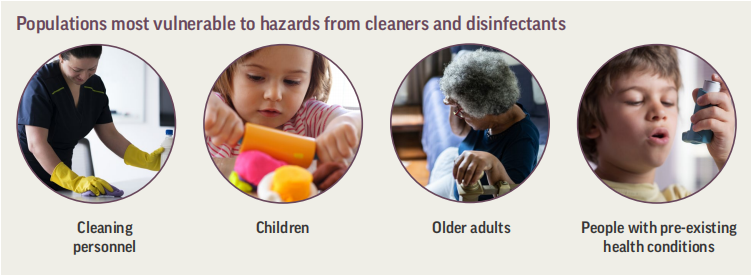
These hazards pose particular risks to the people who clean or disinfect indoor spaces and thus are exposed to high concentrations of the substances over time. Other vulnerable populations include children, older adults, and people with pre-existing health conditions.
这些危害对长期接触高浓度化学物质的清洁人员风险尤其显著,儿童、老年人及有基础疾病的人群也属于易感群体。
Populations most vulnerable to hazards from cleaners and disinfectants 易受清洁用品危害的人群
- Cleaning personnel 清洁人员
- Children 儿童
- Older adults 老年人
- People with pre-existing health conditions 有基础疾病的人群
Unfortunately, building types where these populations tend to be (e.g., daycare centers, schools, nursing facilities, and hospitals) often use the harshest cleaning products and disinfectants.
不幸的是,这类易感人群聚集的场所(如托儿所、学校、养老院、医院),往往使用刺激性最强的清洁产品和消毒剂。
Green Building Strategies 绿色建筑策略
Green building strategies reduce exposure to VOCs and other harmful chemicals during operations by implementing green cleaning, which encompasses cleaning processes and products that reduce environmental impact, limit people's exposure to toxic chemicals, and support healthier IAQ for all building occupants.
绿色建筑通过实施绿色清洁策略,减少运营阶段的 VOCs 及其他有害化学物质暴露。绿色清洁采用低环境影响的清洁流程与产品,限制人体接触有毒化学品,为所有使用者提供更健康的室内空气质量。
Green cleaning strategies that aim to reduce exposure to harsh chemicals include:
- Substituting safer cleaning products for typical products that may have more hazardous chemicals
- Providing PPE to cleaning personnel if harsh chemicals must be used as a last resort
旨在减少刺激性化学物质暴露的绿色清洁策略包括:
- 用更安全的清洁产品替代含高危害化学物质的传统产品
- 若必须使用刺激性化学品,需为清洁人员配备个人防护装备(PPE)
Quality of Life Note 生活质量补充:绿色清洁策略还能节约水资源与能源,减少废弃物产生,从而降低运营成本。


 京公网安备 11010602007285号