资料文档目录

8.9 Energy Metering 能源计量

Energy Metering
Just like water, energy use cannot be managed unless it is measured. Project teams need to understand the amount of energy a building uses and how that amount is distributed between uses. Energy meters are measuring devices and reporting systems that track energy use over time. Every customer with an electric utility has an energy meter; this is how the utility company knows how much to charge.
能源计量
与用水同理,能源消耗唯有通过计量,方能实现有效管理。项目团队需掌握建筑的总能耗水平,以及各项用途间的能耗分布情况。能源计量表是用于长期追踪能耗的测量装置与数据报送系统。所有电力用户均配备能源计量表,公用事业单位依据计量数据核算用电费用。
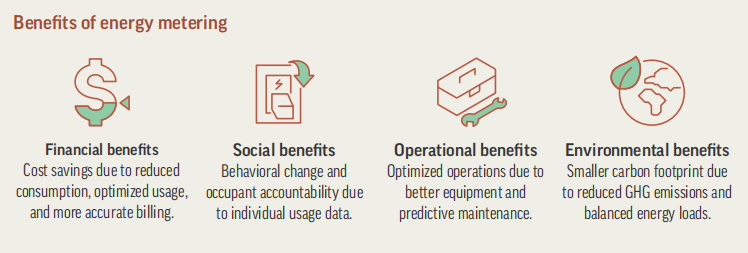
Benefits of energy metering
能源计量的益处

1. Financial benefits

财务效益
Cost savings due to reduced consumption, optimized usage, and more accurate billing.
通过降低能耗、优化用能方式与精准计费实现成本节约。

2. Social benefits

社会效益
Behavioral change and occupant accountability due to individual usage data.
基于个体用能数据,推动行为改变,明确使用者责任。

3. Operational benefits

运营效益
Optimized operations due to better equipment and predictive maintenance.
通过设备优化与预测性维护,实现运营效率提升。

4. Environmental benefits

环境效益
Smaller carbon footprint due to reduced GHG emissions and balanced energy loads.
通过减少温室气体排放与平衡能源负荷,降低碳足迹。
8.9 Energy Metering 能源计量
Green Building Strategies
绿色建筑策略
Green buildings go beyond the utility-supplied energy meter and track the energy use of individual spaces or systems within a building, just as they track water use for individual systems. This granular data allows the project team to:
绿色建筑不再局限于市政基础能耗计量,如同分项监测用水一般,可对建筑内部独立空间与设备系统开展能耗追踪。精细化数据能够帮助项目团队实现:
? Understand and manage patterns of energy use and carbon emissions over time
长期掌握并管控能耗与碳排放变化规律
? Maintain efficient operations
维持建筑高效运营状态
Many buildings use a building automation system (BAS) to control HVAC, lighting, and more. These systems can provide insights into building operations that can ultimately lead to performance improvements.
多数建筑采用楼宇自动化系统管控暖通空调、照明等设施,依托该系统分析运营状况,最终实现建筑性能优化提升。
关键词: