Construction Waste 施工废弃物
Constructing a building generates a considerable amount of waste, especially when an existing building on the site must be cleared or modified.
建筑施工会产生大量废弃物,尤其是在场地内既有建筑需要拆除或改造时。
Another significant source of construction waste is overage – extra material ordered just in case it’s needed. This can result in new, perfectly good materials getting discarded.
施工废弃物的另一个重要来源是余量材料 —— 为应对突发需求而额外订购的材料,这可能导致完好的全新材料被丢弃。
Construction waste that isn’t reused or recycled ends up in either a landfill or a waste-to-energy incinerator.
未被再利用或回收的施工废弃物,最终会进入垃圾填埋场或垃圾焚烧发电厂。
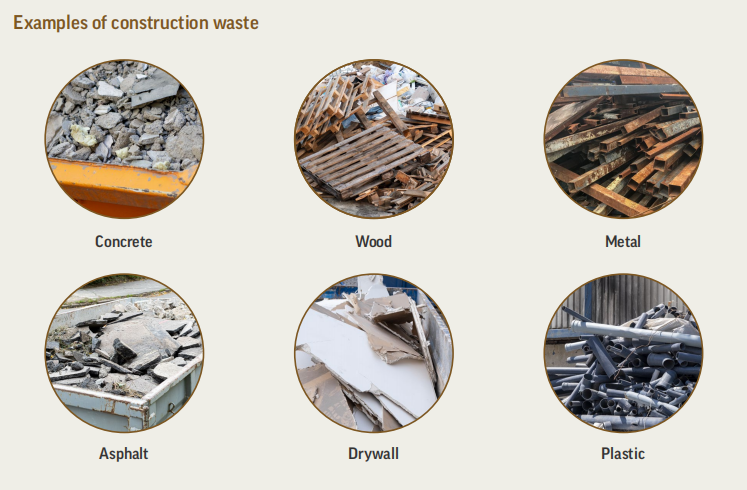
Examples of construction waste 施工废弃物示例
- Concrete 混凝土
- Wood 木材
- Metal 金属
- Asphalt 沥青
- Drywall 石膏板
- Plastic 塑料
Green Building Strategies 绿色建筑策略
Green building strategies aim to reduce the amount of waste that construction generates. Strategies include:
- Salvaging as much material as possible from any existing building on the project site. This is most feasible when an existing building is deconstructed instead of demolished.
- Salvaging as much material as possible when renovating an existing building.
- Minimizing overages through careful design and procurement. Ordering fewer materials in the first place is the most effective way to reduce waste.
- If overages do occur, returning unused material to the manufacturer or donating materials to a reuse outlet.
- Recycling any materials that cannot be reused, returned, or donated. Materials should be separated on the job site to make them easier to recycle.
绿色建筑策略旨在减少施工产生的废弃物,具体方式包括:
- 尽可能从项目场地的既有建筑中回收材料。采用 ** 拆解(deconstruction)** 而非整体拆除的方式,回收可行性最高。
- 对既有建筑进行翻新时,尽可能多地回收材料。
- 通过精细化设计与采购,减少余量材料。从源头减少材料订购量,是降低废弃物最有效的方式。
- 若产生余量材料,将未使用的材料退回制造商,或捐赠给材料再利用机构。
- 对无法再利用、退回或捐赠的材料进行回收。施工现场应做好材料分类,便于后续回收处理。


 京公网安备 11010602007285号