6.4 场地气候韧性
Site Resilience to Climate
场地气候韧性
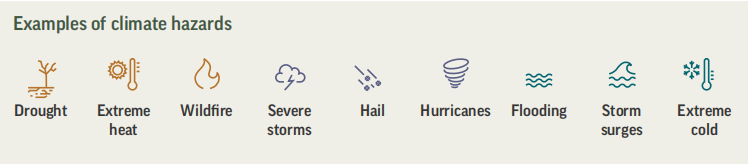
As the climate changes, project sites may be subject to a wide range of potentially catastrophic hazards that were previously unlikely or less extreme.
随着气候变化,项目场地可能面临多种以往发生概率较低、或影响程度较弱,如今可能造成重大灾害的风险。
Common climate hazards include drought, extreme heat, extreme cold, flooding, hail, hurricanes and high winds, landslides, sea level rise, storm surges, tornadoes, wildfires and smoke, and winter storms.
常见气候灾害包括:干旱、极端高温、极端低温、洪涝、冰雹、飓风与强风、滑坡、海平面上升、风暴潮、龙卷风、野火及烟尘、冬季风暴。
There are also non?climate–related hazards to consider, such as earthquakes, volcanic eruptions, and tsunamis.
同时还需考虑非气候类灾害,例如地震、火山喷发和海啸。
Green Building Strategies
绿色建筑策略
Green building sites are resilient. Site resilience refers to the capacity of a site to prevent, withstand, respond to, and recover from a disruption.
绿色建筑的场地具备韧性。场地韧性指场地预防、承受、应对各类扰动并从中恢复的能力。
Green buildings and Sustainable Sites strategies aim to reduce the risk of catastrophic impacts from adverse events on site and in adjacent landscapes by designing, building, and maintaining sites to be more resilient to observed, projected, and future climate and natural hazards.
绿色建筑及可持续场地策略,通过对场地进行设计、建设与运维,提升其对现有、预测及未来气候灾害与自然灾害的适应能力,以此降低不利事件对场地及周边区域造成灾难性影响的风险。
Assessing which hazards to plan for helps project teams design more resilient buildings, communities, and ecosystems.
对需应对的灾害进行评估,有助于项目团队打造更具韧性的建筑、社区与生态系统。
In order to increase the site’s resilience, project teams:
为提升场地韧性,项目团队需开展以下工作:
? Assess the anticipated climate hazards during early project planning (discovery)
- 在项目前期规划(勘察阶段)评估潜在气候灾害
? Use the results of that assessment to inform which resilience strategies are most relevant to the project site
- 依据评估结果,制定适配本项目场地的韧性应对策略
? Incorporate applicable resilience strategies into the design and construction and occupancy phases of the project
- 将适用的韧性策略融入项目设计、施工及运营使用阶段
For example, if extreme heat is a concern, teams might plant shade trees adapted to the region’s anticipated future climate. In an area with a flood risk, teams might design parts of the site to flood safely while protecting buildings and other more sensitive areas.
例如,若存在极端高温风险,可种植适配区域未来气候的遮荫乔木;在洪涝风险区域,可对场地局部进行可安全浸水设计,同时保护建筑及其他敏感区域。
关键词:


 京公网安备 11010602007285号