Construction Management Practices 施工管理实践
While buildings are designed to create healthy indoor environments for occupants, their construction needs to be carefully managed to protect the workers involved in construction, renovation, and repairs, as well as occupants of nearby buildings.
建筑设计旨在为使用者打造健康的室内环境,但施工过程也需精心管理,以保护施工、翻新与维修阶段的工人,以及周边建筑的使用者。
A major threat to construction workers is exposure to equipment fumes and substances that may harm their health. These hazards can come from building materials, such as compounds in wet-applied polyurethane or fine dust from concrete. Diesel engines powering construction equipment also contribute to unhealthy air on construction sites, and they are often left running.
施工工人面临的主要健康威胁,是接触设备废气与有害物质。这些危害可能来自建筑材料(如湿涂聚氨酯中的化合物、混凝土粉尘),也可能来自柴油动力施工设备排放的废气 —— 这类设备常处于怠速状态,导致工地空气质量恶化。
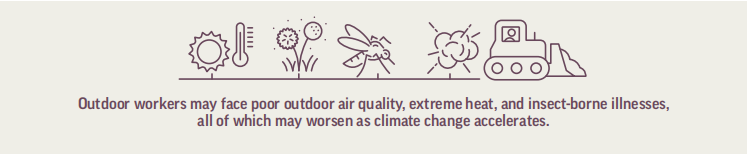
图示说明:户外作业工人可能面临空气质量差、极端高温、虫媒传染病等风险,这些问题会因气候变化加剧。
Green Building Strategies 绿色建筑策略
Green buildings plan and implement sustainable construction management, which are a set of practices that focus on potential impacts to on-site workers and establish health-related safeguards and well-being-focused features on the project jobsite during construction, renovations, retrofits, or tenant fit-outs.
绿色建筑通过可持续施工管理,关注施工对现场工人的潜在影响,并在施工、翻新、改造或租户装修阶段,为工地制定健康保障措施与福祉提升方案。
Sustainable construction management includes plans to address exposure to air pollutants or extreme heat, and tactics for preventing construction activities from contaminating the indoor environment. Strategies include:
- Providing construction crews with frequent access to drinking water and cooling breaks during extreme heat
- Putting protocols in place that trigger work pauses when outdoor conditions are unsafe
- Switching from diesel-powered construction equipment to electric equipment as it becomes available
- Utilizing electronic anti-idling devices that can help optimize run time versus idling time of construction equipment
- Selecting materials with fewer toxic ingredients, as discussed in Chapter 9: Materials and Resources
- Requiring use of specific power tools that manage dust and frequent vacuuming
- Providing construction teams with access to personal protective equipment (PPE), training on how to use it, and incentives to wear it consistently
可持续施工管理包括应对空气污染物、极端高温暴露的方案,以及防止施工活动污染室内环境的措施,具体策略包括:
- 极端高温天气下,为施工人员提供充足饮水与降温休息时间
- 制定安全协议,当户外条件不安全时暂停作业
- 条件允许时,将柴油动力施工设备更换为电动设备
- 使用电子防怠速装置,优化设备运行与怠速时长
- 选择低毒成分材料(详见第 9 章《材料与资源》)
- 要求使用控尘电动工具,并定期吸尘
- 为施工团队提供个人防护装备(PPE)、使用培训,并制定佩戴激励措施


 京公网安备 11010602007285号