Energy Efficiency
A primary function of buildings is to maintain an indoor environment that has a comfortable temperature, sufficient lighting, and clean air. Buildings use energy in a variety of ways to perform these functions.
建筑的核心功能之一,是维持室内舒适的温度、充足的照明与洁净的空气。建筑通过多种方式消耗能源,以实现这些功能。
Green Building Strategies
Green buildings are energy?efficient buildings, meaning they use less energy than other buildings to perform the same tasks or produce the same results because their systems perform well. In other words, energy efficiency means using less energy to get the same job done. This can be accomplished in a variety of ways.
绿色建筑即高能效建筑,凭借优良的系统性能,完成同等工作、实现同等效果时能耗更低。简单来说,能效就是用更少的能源完成同样的任务,可通过多种方式实现。
A project's energy efficiency is impacted by its basic features, including:
项目的能效受以下基础条件影响:
- The building's shape, size, and orientation
- 建筑的外形、体量与朝向
- The project site's weather and climate conditions, such as the movement of the sun, cloud cover, and wind patterns
- 项目场地的气象气候条件,例如日照、云量、风向
- The building materials, especially the proportion of the building envelope that is glass
- 建筑材料,尤其是围护结构中的玻璃占比
- The project's vulnerability to climate change impacts, such as warming temperatures
- 项目受气候变化(如气温升高)影响的脆弱性
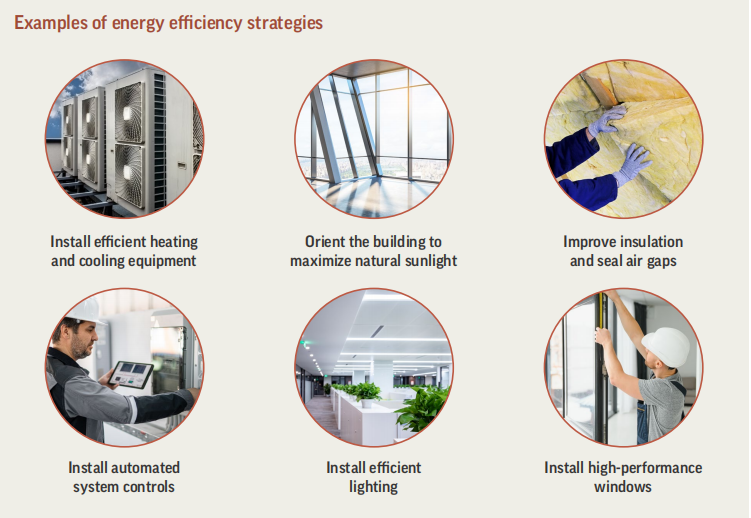
Examples of energy efficiency strategies
能效提升策略示例
- Install efficient heating and cooling equipment
安装高效冷暖设备
- Orient the building to maximize natural sunlight
优化建筑朝向,充分利用自然采光
- Improve insulation and seal air gaps
强化保温隔热,封堵空气缝隙
- Install automated system controls
安装自动化系统控制装置
- Install efficient lighting
采用高效照明系统
- Install high?performance windows
安装高性能节能窗


 京公网安备 11010602007285号