Grid Interactivity 电网互动
Electrifying buildings increases the demand on electrical grids and changes the pattern of when that demand occurs. For example, if buildings in a cold region transition from on-site combustion to heat pumps, the power grid will need to meet higher demand during the winter, which could affect grid reliability if not properly managed.
建筑电气化会增加电网负荷,并改变用电需求的时段分布。例如,寒冷地区建筑从现场燃烧供暖改为热泵供暖后,冬季电网负荷会显著上升,若管理不当,可能影响电网稳定性。
Green Building Strategies 绿色建筑策略
Green buildings help manage demand on electrical grids through three main strategies:
绿色建筑主要通过以下三种策略协助管理电网负荷:
-
Grid interactivity, which refers to systems that allow buildings to manage the level and timing of their electrical demand on the grid. Managing energy demand through grid interactivity is sometimes called load shaping and can involve a variety of strategies for responding to grid signals.
电网互动:指允许建筑管理自身用电负荷大小与时段的系统。通过电网互动进行负荷管理也被称为负荷整形,可包含多种响应电网信号的策略。
-
Demand response, a change in a project’s normal electricity-use patterns that is triggered by a signal from a grid operator — typically either an increase in the price of electricity or an alert that system reliability has been jeopardized. Demand response can be manual or automated. Either way, in response to a signal from the grid, a project temporarily reduces excessive consumption and non-critical loads to help the grid continue providing power to everyone.
需求响应:指项目根据电网运营商信号(通常是电价上涨或电网可靠性预警)调整常规用电模式的行为。需求响应可手动或自动执行,两种方式均为响应电网信号,暂时削减超额用电与非关键负荷,保障电网持续为所有用户供电。
-
Energy storage, the ability to store electrical or thermal energy on the project site and then either consume the stored energy or return it to the grid if grid power is in short supply. Stored energy can either come from renewable electricity generated on site or electricity from the grid during non-peak hours. Electricity can be stored in battery systems. Thermal energy can be stored in an insulated tank, often in the form of ice. This tank is sometimes called a thermal battery, even though it stores heat, not electricity.
储能:指在项目现场储存电能或热能,在电网供电不足时自用或回输电网的能力。储能来源包括现场可再生电力或非高峰时段的电网电力;电能可储存在电池系统中,热能可储存在保温水箱(常以冰的形式储存)中,这类水箱也被称为 “热电池”,尽管储存的是热量而非电力。
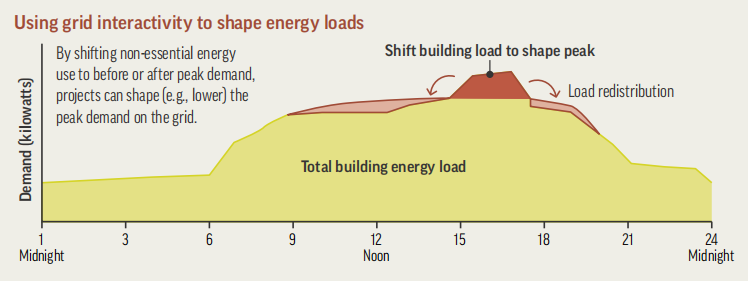
Using grid interactivity to shape energy loads 利用电网互动优化用电负荷
By shifting non-essential energy use to before or after peak demand, projects can shape (e.g., lower) the peak demand on the grid.
通过将非必要用电转移至高峰时段前后,项目可调整(如降低)电网峰值负荷。
Quality of life
By balancing the supply and demand of energy, grid interactivity supports resilience. It also can lower energy costs for the project.
通过平衡能源供需,电网互动提升了建筑的韧性,同时也可降低项目的能源成本。


 京公网安备 11010602007285号