No-Smoking and No-Vehicle Idling Policies 禁烟与车辆怠速管控政策
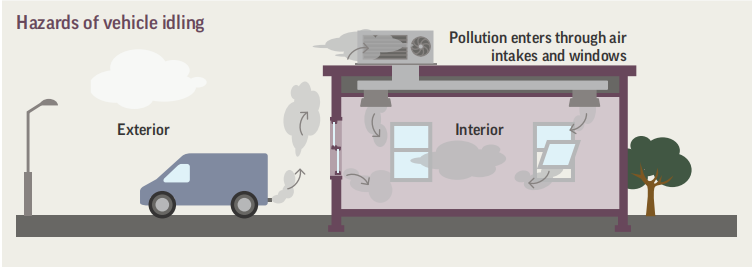
Vehicle idling, which refers to when cars and trucks are left running near a building, generates pollutants that may end up indoors.
车辆怠速指汽车或卡车在建筑附近长时间空转,会产生污染物并最终进入室内。
图示说明:车辆怠速产生的污染物,会通过空气入口和窗户进入建筑内部,影响室内空气质量。
When cigarettes or other devices are smoked, they generate pollutants that linger long after the smoke settles out of the air. Smoking indoors exposes occupants to environmental tobacco smoke (ETS), which refers to smoke that is not from an individual's own smoking but rather from someone else's cigarette, cigar, pipe, or electronic smoking device. Breathing in ETS is known as passive smoking, secondhand smoking, or involuntary smoking. This causes many of the same health effects as smoking directly, including exacerbating existing respiratory illnesses and increasing risk of developing lung cancer. Tobacco smoke from cigarettes, cigars, pipes, and electronic smoking devices (vapes) is not the only source of indoor smoke. Smoking cannabis and controlled substances also releases a range of airborne health hazards.
吸烟(包括电子烟)产生的污染物,在烟雾消散后仍会长期残留。室内吸烟会让使用者暴露于 ** 环境烟草烟雾(ETS)** 中 —— 即非本人吸烟,而是来自他人香烟、雪茄、烟斗或电子烟设备的烟雾。吸入这类烟雾被称为被动吸烟、二手烟或非自愿吸烟,会引发与主动吸烟类似的健康问题,包括加重呼吸系统疾病、增加肺癌风险。除了烟草烟雾,大麻等受控物质的燃烧也会释放多种空气传播的健康危害。
Green Building Strategies 绿色建筑策略
Green buildings implement policies that safeguard IAQ from the pollutants that vehicles and smoking generate. Strategies include:
- Prohibiting vehicle idling on site and smoking indoors
- Educating occupants and visitors about the pollution that vehicle idling generates and the dangers of ETS from smoking
- Restricting outdoor smoking near the building to avoid entry of pollutants through doors, windows, and air-intake ducts for ventilation systems
- Locating building air intakes away from loading docks and bus stops in order to minimize the entry of pollutants from vehicles
- Posting clear, prominent signage about no-smoking and no-vehicle idling policies
- Having established procedures for enforcing these policies
绿色建筑通过以下政策保护室内空气质量,免受车辆和吸烟产生的污染物影响:
- 禁止在场地内车辆怠速和室内吸烟
- 向使用者与访客宣传车辆怠速产生的污染,以及二手烟的危害
- 限制建筑周边的室外吸烟行为,避免污染物通过门窗、通风系统进风口进入室内
- 将建筑空气入口设置在远离装卸区和公交站的位置,减少车辆污染物的进入
- 设置清晰醒目的禁烟与禁怠速标识
- 制定明确的政策执行流程
Prohibiting vehicle idling and smoking are examples of source control, which is the most effective way to protect IAQ from the hazards these activities generate.
禁止车辆怠速和室内吸烟是源头控制的典型例子,这是保护室内空气质量免受这些活动危害的最有效方式。


 京公网安备 11010602007285号