Active Transportation
主动式交通
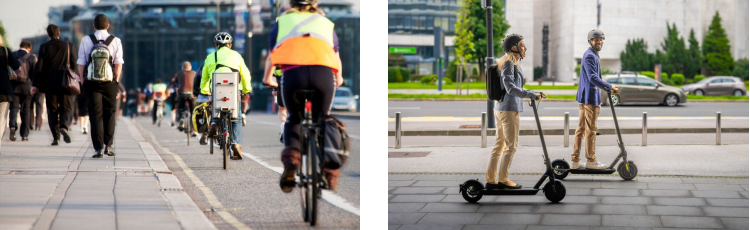
Aside from public transit, one of the most popular modes of alternative travel is active transportation: human?powered mobility, such as biking, walking, or wheeling.
除公共交通外,最主流的替代出行方式之一为
主动式交通,即依靠人力驱动的出行模式,例如骑行、步行、轮椅出行。
A project’s location impacts how practical, safe, and efficient it is to reach via active transportation. While the location itself has the strongest impact on the feasibility of active transportation, there are also amenities the building can provide to make active transportation more attractive.
项目区位直接影响主动式交通出行的实用性、安全性与便捷性。尽管区位是决定主动式交通可行性的最核心因素,建筑也可通过配套设施提升主动出行的吸引力。
Green Building Strategies
绿色建筑策略
Green buildings can support active travel by:
绿色建筑可通过以下方式支持主动式出行:
? Selecting a location?efficient area with adequate sidewalks and crosswalks
- 选址于区位效能良好、人行道与过街设施完善的区域
? Selecting a location near biking paths or roads with dedicated bike lanes
- 临近自行车道或设有专用骑行车道的道路
? Meeting the specific needs of cyclists by providing showers, changing areas, adequate amounts of covered and secure bike storage, and bike?repair stations
- 为骑行者配置淋浴间、更衣区、足量有遮蔽的安全自行车停放点及自行车维修站,满足其专项需求
Example of active transportation
主动式交通示例


 京公网安备 11010602007285号