Lighting
照明
Thanks to advances in lighting technology, electric lighting uses less energy than it used to. Its contribution to a building's energy use is quantified in terms of connected lighting power (also known as lighting power density), which is a measure of how much power per square foot or square meter would be used if all the lights were on.
随着照明技术进步,电气照明能耗大幅降低。建筑照明能耗通过**连接照明功率(又称照明功率密度LPD)**量化,指建筑所有灯具全部开启时,单位面积的用电功率。
Lighting needs differ by space type. For example, a classroom requires a different lighting level than a retail store or a warehouse. So, as with overall energy use, reductions in connected lighting power are compared to space?type?specific baselines.
不同功能空间的照明需求不同,例如教室、零售店、仓库的照度标准存在差异。因此,照明功率的降低幅度,需对照对应空间类型的基准值评判。
Green Building Strategies
绿色建筑策略
Green buildings implement strategies to reduce the energy required for electric lighting. Strategies include:
绿色建筑通过以下策略降低电气照明能耗:
- Designing, testing, and managing lighting systems to provide only the quality and quantity of light needed for the purpose.
- 设计、调试并管控照明系统,仅提供空间所需的照度与光质。
- Selecting LEDs, which dramatically improve the efficiency of lighting systems and make it easy to locate lights only where they are needed.
- 选用LED灯具,大幅提升照明系统能效,实现按需定点布灯。
- Ensuring the lights only come on when and where they are needed. Automated lighting controls can dim lights when there is enough natural light and turn them off when a space is unoccupied.
- 实现照明按需启闭;智能控制系统可在自然光充足时调暗灯光,空间无人时自动关灯。
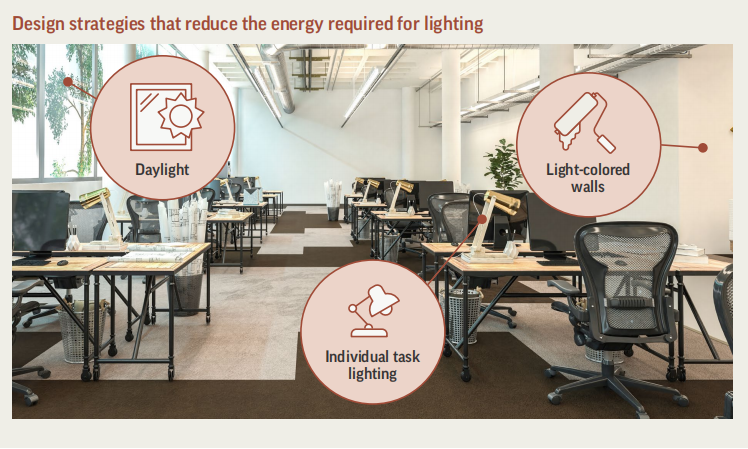
- Implementing additional design strategies, like daylighting, occupant access to task lighting, and using light colors on the walls and ceilings.
- 采用其他节能设计:利用天然采光、使用者可控的局部任务照明、墙面与天花板采用浅色系提升反光。
Design strategies that reduce the energy required for lighting
降低照明能耗的设计策略


 京公网安备 11010602007285号