Urban Heat Island Reduction
缓解城市热岛效应
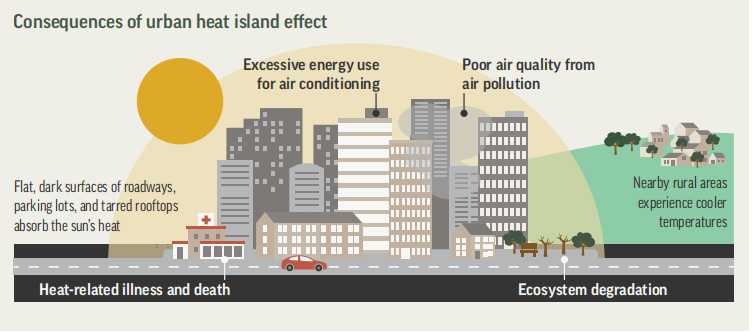
An urban heat island occurs when a city experiences much warmer temperatures than nearby rural areas because the flat, dark surfaces of roadways, parking lots, and tarred rooftops absorb the sun’s heat during the day.
城市热岛效应,是指城市气温显著高于周边乡村区域的现象,原因在于道路、停车场、沥青屋顶等平整深色表面在白天吸收太阳热量。
Some are also slow to release the heat at night.
这类硬质表面在夜间散热速度也较慢。
The heat island effect in urban areas can increase heat?related illness and death, increase energy demand and costs, worsen air quality, and degrade ecosystems.
城市热岛效应会加剧高温相关疾病与死亡风险、提升能源需求与能耗成本、恶化空气质量并破坏生态系统。
Green Building Strategies
绿色建筑策略
Green buildings and their sites aim to mitigate the heat island effect by:
绿色建筑及其场地旨在通过以下方式缓解热岛效应:
? Conserving old trees and planting new ones
- 保护原有乔木并种植新树
? Shading paved areas with plants, energy generation systems, or architectural devices or structures
- 利用植被、发电系统或建筑构件 / 构筑物为铺装区域提供遮阳
? Installing white materials or materials with a high solar reflectance index (SRI), which is a measure of the constructed surface’s ability to stay cool in the sun, on surfaces such as walls and roofs to better reflect sunlight
- 在墙面、屋面等表面采用白色或 ** 高太阳反射指数(SRI)** 材料(该指数用于衡量硬质表面在日照下保持低温的能力),以更好地反射太阳光
? Installing a green/vegetated roof, which is a vegetative layer grown on a rooftop, using native or adapted plant species
- 采用原生或适生植物,打造绿色 / 植被屋顶(即铺设于屋顶的植被层)
? Using open?grid paving
- 使用镂空格栅铺装
? Locating parking under cover (e.g., underground)
- 将停车区设置于遮蔽区域(例如地下)
Quality of life: Disadvantaged communities often bear the brunt of urban heat islands due to systemic injustices that drive inequitable land?use patterns.
生活品质:受系统性不公导致土地利用模式不均衡,
弱势社区往往承受城市热岛效应的主要冲击。
For example, trees lower air temperature and help combat the urban heat island effect, yet, on average, neighborhoods with a majority of people of color have 33% less tree canopy.
例如,树木可降低气温、缓解城市热岛效应,但平均而言,少数族裔聚居社区的树冠覆盖率要低 33%。
Also, many cannot afford air conditioning, escalating their risk of illness or death due to extreme heat.
此外,许多居民无力承担空调费用,加剧了极端高温下患病甚至死亡的风险。


 京公网安备 11010602007285号