英文 + 中文对照翻译(LEED 专业术语版)
Every green building project has a location. That location has significant implications for the sustainability of the project. One of the biggest aspects that is influenced by location is transportation — how people get to and from the building.
每个绿色建筑项目都有其区位。区位对项目的可持续性影响重大,其中受区位影响最大的方面之一是交通,即人们往返建筑的出行方式。
Why it matters:
重要性:
A building’s location determines what impact the project will have on land, most significantly whether the project will repurpose land that has previously been developed or develop land for the first time.
建筑区位决定项目对土地的影响,最关键的是项目是
再开发既有建设用地,还是
首次开发未利用土地。
A building’s location influences how the project will interact with the local community. Will the community benefit from amenities and services offered by the project? Will its construction provide job opportunities for local workers? Will people be displaced if the area becomes more desirable?
建筑区位影响项目与当地社区的互动关系。社区能否从项目配套设施与服务中获益?施工能否为当地居民提供就业机会?区域吸引力提升后是否会造成居民被迫搬迁?
A building’s location impacts how people can get to and from the project site and the carbon emissions associated with this travel.
建筑区位影响人们往返项目场地的出行方式,以及通勤产生的碳排放。
How Location and Transportation strategies can help:
区位与交通策略的作用:
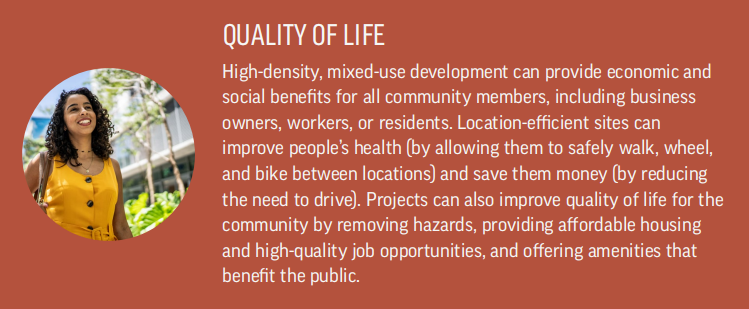
Selecting a high?density, location?efficient site allows a project to support local economies and promote thriving, cohesive communities.
选择
高密度、区位效能优的场地,助力带动地方经济,营造繁荣、融合的社区。
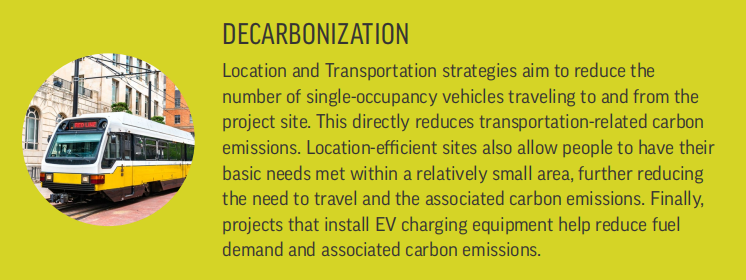
Ensuring a site is well connected to accessible transit options enables people to get to and from the building while minimizing associated carbon emissions.
保障场地与便捷的公共交通接驳顺畅,使人们可低碳往返建筑,最大限度降低通勤碳排放。
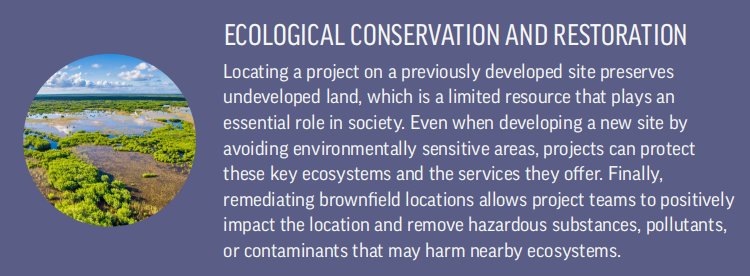
Considering site factors like prior development and sensitive land protection helps conserve natural areas.
兼顾既有开发基础、敏感土地保护等场地条件,有助于保护自然生态区域。
Every project, whether new or existing, has opportunities to improve lives and to responsibly steward resources through sustainable location and transportation choices.
无论是新建还是既有改造项目,均可通过可持续的区位与交通规划,改善人居生活,合理管控自然资源。
开发密度 DEVELOPMENT DENSITY
- Development density: A measure of the total building floor area or total number of dwelling units on a unit of land relative to the total buildable area on the same unit of land. In other words, a measure of how many buildings or housing units are on a given amount of land.
开发密度:衡量单位土地上的总建筑面积或住宅单元数量,与该地块可建设总面积的比值。简言之,即特定土地范围内建筑或住宅单元的密集程度。
区位效能 LOCATION EFFICIENCY
- Location efficiency: The effect of a facility’s location on travel behavior and related impacts.
区位效能:设施所在位置对出行行为及其相关环境影响产生的作用。
- Mixed?use areas: Areas with a variety of publicly available buildings and space types that serve many different needs.
混合功能区:具备多种公共建筑及空间类型、可满足多元需求的区域。
经济适用住房与混合用途 AFFORDABLE HOUSING AND MIXED USE
- Affordable housing: Housing units that are set aside for those whose incomes are low when compared with the incomes of most others in the surrounding area.
经济适用住房:为收入低于周边区域平均水平的人群预留的住宅单元。
- Disadvantaged communities: Groups of people who have been systematically denied a full opportunity to participate in aspects of economic, social, and civic life.
弱势社区:在经济、社会及公共生活层面,被系统性剥夺平等参与机会的人群聚居区。
交通需求管理 TRANSPORTATION DEMAND MANAGEMENT
- Transportation demand management (TDM): A set of strategies aimed at maximizing traveler choices to encourage more sustainable transportation decisions.
交通需求管理(TDM):一系列策略,旨在最大化出行选择,引导可持续的出行决策。
- Vehicle miles traveled (VMT): The estimated annual sum of miles traveled by people driving to and from the project site.
车辆行驶里程(VMT):人员往返项目场地的年度预估总行驶里程。
公共交通可达性 TRANSIT ACCESS
- Alternative transportation: Modes of transportation other than single?passenger motor vehicles. Some forms of alternative transportation include carpools, public transit, and bicycling.
替代型交通方式:单人私家车以外的出行方式,包括拼车、公共交通、自行车出行等。
- Commuting emissions: The carbon emissions associated with traveling to and from a building (e.g., the emissions generated by driving a vehicle to and from the building).
通勤碳排放:往返建筑过程中产生的碳排放,例如驾车通勤产生的排放。
主动式交通 ACTIVE TRANSPORTATION
- Active transportation: Human?powered mobility, such as biking, walking, or wheeling.
主动式交通:依靠人力驱动的出行方式,如骑行、步行、轮椅出行。
敏感土地保护 SENSITIVE LAND PROTECTION
- Ecosystem: A biological community of interacting organisms and their physical environment.
生态系统:相互作用的生物群落与其所处物理环境的整体。
- Ecosystem services: The direct and indirect benefits that ecosystems provide humans.
生态系统服务:生态系统直接或间接为人类提供的各项效益。
- Environmentally sensitive area: A place that needs to be protected due to its vulnerability or importance. Examples include forests, farmland, floodplains, bodies of water, and certain types of ecosystems, such as wetlands and areas of notable habitat.
环境敏感区:因生态脆弱性或重要性需加以保护的区域,例如森林、农田、洪泛区、水体,以及湿地、重要栖息地等特定生态系统。
棕地与敏感受体 BROWNFIELDS AND SENSITIVE RECEPTORS
- Brownfield: A type of property whose expansion, redevelopment or reuse may be complicated by hazardous substances, pollutants, or contaminants.
棕地:因存在有害物质、污染物,导致扩建、再开发或再利用存在阻碍的地块。
- Brownfield remediation: Removing dangerous or poisonous substances or limiting the effect that they have on people and the environment.
棕地修复:清除危险有毒物质,或限制其对人类及环境产生的影响。
- Sensitive receptors: Areas where occupants are more susceptible to the adverse effects of exposure to toxic chemicals, pesticides, and other pollutants.
敏感受体:其中人群更易受有毒化学品、杀虫剂及其他污染物不良影响的区域。
LEED 影响范畴:区位与交通
LEED 体系中,区位与交通相关策略覆盖其全部三大影响范畴:


 京公网安备 11010602007285号