CHAPTER 10 Indoor Environmental Quality 第 10 章 室内环境质量
Fundamentally, buildings exist to provide shelter and safe places for people to be inside. A building’s indoor environment is made up of many factors, including accessibility, lighting, sound levels, temperature, connection to the outdoors, air quality, and more, and has a direct impact on the people inside.
从根本上说,建筑的存在是为了给人们提供庇护和安全的室内场所。建筑的室内环境由多个因素构成,包括可达性、采光、声环境、温度、与室外的连通性、空气质量等,这些因素会直接影响室内人员。
Why it matters: 重要性说明
- Better indoor environmental quality can enhance the lives of building occupants, increase the longevity of a project, and reduce liability for building owners.
良好的室内环境质量可以提升建筑使用者的生活品质、延长项目使用寿命,并降低业主的运营责任风险。
- Better indoor air quality is associated with better health outcomes. For example, lower indoor air pollution in people’s homes is associated with better-controlled asthma symptoms.
更优质的室内空气质量与更好的健康状况直接相关,例如住宅内空气污染水平较低时,哮喘症状能得到更好的控制。
- If a building is comfortable and functional, the people inside are more likely to feel good. A strengthened sense of well-being may lead to improved health outcomes, enhanced receptiveness to learning, and higher workplace morale.
当建筑既舒适又实用时,室内人员更容易获得愉悦感。更强的幸福感有助于改善健康状况、提升学习接受度,并提高工作场所的士气。
- The personnel costs of salaries and benefits far exceed the operating costs of an office building, so strategies that improve employees’ health and productivity can have a large return on investment over the long run.
办公建筑的人员薪资福利成本远高于运营成本,因此改善员工健康与生产力的策略,长期来看能带来极高的投资回报。
How Indoor Environmental Quality strategies can help: 室内环境质量策略的作用
- Discovering and prioritizing the needs of occupants allow project teams to find holistic solutions that make spaces functional for the people inside.
通过了解并优先满足使用者的需求,项目团队可以找到整体性解决方案,让空间真正服务于室内人员。
- Giving occupants control over aspects of the indoor environment increases their sense of comfort and satisfaction in the space.
让使用者能够自主调节部分室内环境因素,可提升他们在空间中的舒适感与满意度。
- Preventing pollution from entering the building, and removing any pollution that does enter, helps preserve indoor air quality.
防止污染物进入建筑,并清除已进入的污染物,有助于维持良好的室内空气质量。
- Careful planning and monitoring help ensure that indoor environments don’t degrade over time and that buildings are prepared to provide shelter even during adverse events.
周密的规划与持续监测,有助于确保室内环境不会随时间推移而恶化,也能让建筑在突发事件中仍具备基本的庇护功能。
INDOOR ENVIRONMENTAL QUALITY TERMS 室内环境质量术语
INDOOR ENVIRONMENTAL QUALITY 室内环境质量
- Indoor environmental quality (EQ): The conditions in a space that affect people's health, safety, well-being, and quality of life.
室内环境质量(EQ):空间中影响人们健康、安全、福祉与生活质量的各类条件的总和。
ACCESSIBILITY AND INCLUSIVE DESIGN 可达性与包容性设计
- Inclusive design: A creative approach focused on making the built environment accessible to people of all ages, abilities, and demographics. Inclusive design is also known as universal design.
包容性设计(通用设计):一种旨在让所有年龄、能力与背景的人群都能使用建成环境的设计方法,也被称为通用设计。
LIGHTING DESIGN 采光设计
- Daylighting: A lighting strategy that intentionally allows natural light into a space through windows, skylights, or other transparent or translucent openings. Proper daylighting designs rely primarily on indirect and diffused light rather than direct sunlight, and they often include a shading system to prevent glare and unwanted heat gain. Use of natural daylight can help reduce the need for electric lighting, thus reducing energy use.
自然采光:通过窗户、天窗或其他透明 / 半透明开口,将自然光引入室内的照明策略。合理的采光设计主要利用间接光与漫射光而非直射阳光,通常会配备遮阳系统以避免眩光和多余热量。利用自然光可减少人工照明需求,从而降低能耗。
THERMAL COMFORT 热舒适
- Thermal comfort: A person's subjective sense of satisfaction with their thermal conditions. Environmental factors, such as air temperature and air movement, along with personal factors, such as activity level and clothing, can affect thermal comfort. Humidity and radiant heat are also important.
热舒适:人体对所处热环境的主观满意程度。环境因素(如空气温度、气流)与个人因素(如活动水平、衣着)都会影响热舒适,湿度与辐射热同样是重要影响因素。
BIOPHILIC ENVIRONMENTS 亲自然环境
- Biophilic design: The practice of connecting people and nature in places of cultural and ecological significance within the built environment and communities. Biophilic environments aim to foster a connection between people and nature, improving well-being and environmental stewardship.
亲自然设计:在建成环境与社区中,于具有文化和生态意义的场所建立人与自然联系的实践。亲自然环境旨在促进人与自然的连接,提升使用者福祉并培养环境责任感。
CONSTRUCTION MANAGEMENT PRACTICES 施工管理实践
- Sustainable construction management: A set of practices that focus on potential impacts to on-site workers and establish health-related safeguards and well-being-focused features on the project jobsite during construction, renovations, retrofits, or tenant fit-outs.
可持续施工管理:在施工、翻新、改造或租户装修阶段,针对现场工人的潜在影响制定健康保障措施与福祉提升方案的管理实践。
INDOOR AIR QUALITY 室内空气质量
- Indoor air quality (IAQ): The air quality within and around buildings and structures, especially as it relates to the health and comfort of building occupants.
室内空气质量(IAQ):建筑及构筑物内部与周边的空气质量,尤其与建筑使用者的健康和舒适度相关。
- Source control: An approach designed to eliminate sources of harm, such as contaminants that threaten indoor air quality.
源头控制:旨在消除有害来源(如威胁室内空气质量的污染物)的管理方法。
NO SMOKING AND NO VEHICLE IDLING POLICIES 禁烟与车辆怠速管控
- Environmental tobacco smoke (ETS): Smoke that is not from an individual's own smoking but rather from someone else's cigarette, cigar, pipe, or electronic smoking device. Breathing in ETS is known as passive smoking, secondhand smoking, or involuntary smoking.
环境烟草烟雾(ETS):非本人吸烟,而是来自他人香烟、雪茄、烟斗或电子烟设备的烟雾。吸入这类烟雾被称为被动吸烟、二手烟或非自愿吸烟。
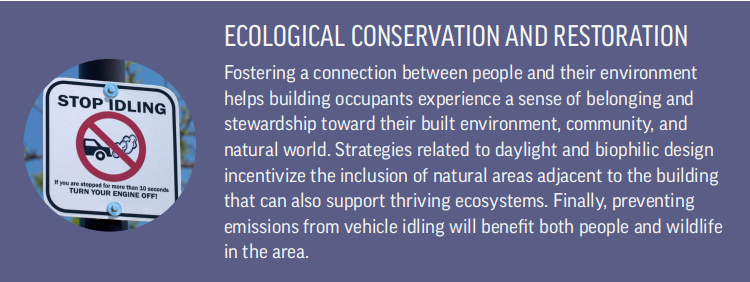
- Vehicle idling: When cars and trucks are left running near a building, generating pollutants that may end up indoors.
车辆怠速:汽车和卡车在建筑附近空转,产生的污染物可能进入室内。
PARTICULATE MATTER AND AIR FILTRATION 颗粒物与空气过滤
- Particulate matter (PM): A mixture of solid particles and liquid droplets found in both indoor and outdoor air. Some particles, such as dust, dirt, soot, or smoke, are large enough or dark enough to be seen with the naked eye. Others are so small that they can only be detected using an electron microscope.
颗粒物(PM):室内外空气中的固体颗粒与液滴混合物。部分颗粒(如灰尘、污垢、烟尘)足够大或足够深,肉眼可见;其他颗粒则极小,只能用电子显微镜检测。
- PM?.?: Aerosol particles with a diameter of 2.5 micrometers or less. This type of small PM is the most concerning because it can travel deeper into the lungs than larger particles can.
PM?.?:直径≤2.5 微米的气溶胶颗粒。这类细颗粒物是最受关注的污染物,因为它比大颗粒更易深入肺部。
GREEN CLEANING 绿色清洁
- Green cleaning: Cleaning processes and products that reduce environmental impact, limit people's exposure to toxic chemicals, and support healthier IAQ for all building occupants.
绿色清洁:通过清洁流程与产品减少环境影响,限制人体接触有毒化学品,并为所有建筑使用者提供更健康的室内空气质量。
INTEGRATED PEST MANAGEMENT 综合虫害管理
- Integrated pest management (IPM): A method of pest management that protects human health and the surrounding environment, and improves economic returns through the most effective, lowest-risk option.
综合虫害管理(IPM):一种虫害管理方法,通过最有效、风险最低的方案,保护人体健康与周边环境,并提升经济效益。
MAINTAINING HEALTHY INDOOR AIR QUALITY 维持健康的室内空气质量
- Continuous indoor air monitoring: A way to automatically measure levels of indoor air pollutants frequently (often multiple times per hour) over a longer span of time. Equipment often measures carbon monoxide (CO) and carbon dioxide (CO?), but other substances can also be monitored, including particulates, total VOCs, or a specific VOC like formaldehyde.
室内空气持续监测:长时间内高频(通常每小时多次)自动测量室内空气污染物水平的方式。设备通常会监测一氧化碳(CO)和二氧化碳(CO?),也可监测颗粒物、总挥发性有机物(TVOCs)或甲醛等特定挥发性有机物。
OPTIMIZING AIR QUALITY AND ENERGY USE 优化空气质量与能源利用
- Demand-controlled ventilation: A type of ventilation system that automatically adjusts the airflow rate based on signals from air-pollutant sensors or occupancy sensors. Most demand-controlled systems use indoor CO? levels to trigger a higher or lower ventilation rate based on the number of occupants.
按需控制通风(DCV):一种根据空气污染物传感器或人员传感器信号自动调节通风量的系统。大多数按需控制系统以室内 CO?浓度为依据,根据人员数量调整通风速率。
PASSIVE SURVIVABILITY 被动生存能力
- Passive survivability: A building's ability to maintain critical life-support conditions if services such as power, heating fuel, or water are lost.
被动生存能力:当电力、供暖燃料或水等供应中断时,建筑维持关键生命支持条件的能力。
LEED Impact Areas: Indoor Environmental Quality
The Indoor Environmental Quality strategies in LEED address all three of LEED’s impact areas:


 京公网安备 11010602007285号