Process Water Use
工艺用水
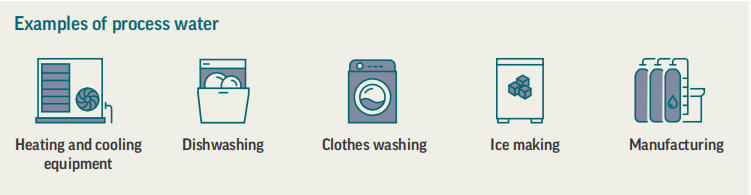
Process water is used for building systems, such as cooling towers, boilers, and chillers.
工艺用水用于冷却塔、锅炉、冷水机组等建筑设备系统。
It can also refer to water used in commercial and industrial dishwashing, clothes washing, and ice making.
也包括商业及工业场景中的洗碗、洗衣、制冰用水。
Process Water Use
工艺用水
Process water can account for a significant amount of a building’s water use.
工艺用水可占建筑总用水量的很大一部分。
Most large buildings use sizable amounts of potable water for cooling towers, which release heat from air?conditioning systems through evaporation.
大多数大型建筑使用大量饮用水供给冷却塔,冷却塔通过水分蒸发为空调系统散热。
Most process water does not need to be clean enough to drink, yet it is standard to use potable sources.
大部分工艺用水无需达到饮用水标准,但行业常规做法仍是使用饮用水。
Green Building Strategies
绿色建筑策略
Green building strategies aim to reduce process water use by:
绿色建筑通过以下策略减少工艺用水:
? Using ground?source heat pumps instead of cooling towers. Heat pumps release excess heat into the ground, saving water that would otherwise be evaporated for cooling.
- 采用地源热泵替代冷却塔。热泵将多余热量排入地下,节约原本用于冷却蒸发的水量。
? Metering water lost to evaporation during cooling tower use to implement water reduction strategies.
- 计量冷却塔运行中的蒸发损耗水量,以此制定节水方案。
? Maximizing the efficiency of cooling towers to reduce their water use.
? Selecting water?efficient appliances that use less water for other processes (e.g., laundry machines and dishwashers).
- 选用节水型设备,减少其他工艺用水(如洗衣机、洗碗机)。
? Investigating the feasibility of using alternative non?potable sources of water (e.g., rainwater or graywater) for some process water uses.
- 研究部分工艺用水采用雨水、灰水等非饮用水替代水源的可行性。


 京公网安备 11010602007285号