The Building Envelope
The term building envelope refers to the components, such as roofs, walls, windows, and foundation, that separate a building's interior from its exterior. The building envelope provides thermal control, structural integrity, and protection from weather.
建筑围护结构指的是屋顶、墙体、窗户和地基等构件,用于分隔建筑室内与室外。围护结构提供热工控制、结构完整性及气候防护。
A building envelope can have a significant impact on the energy required to condition a building's indoor environment. The components of a building envelope work together to maintain a comfortable, healthy interior and protect it from exterior temperatures and conditions.
建筑围护结构对调节室内环境所需的能耗有显著影响。围护结构各构件协同工作,维持舒适、健康的室内环境,并抵御室外温度与气候影响。
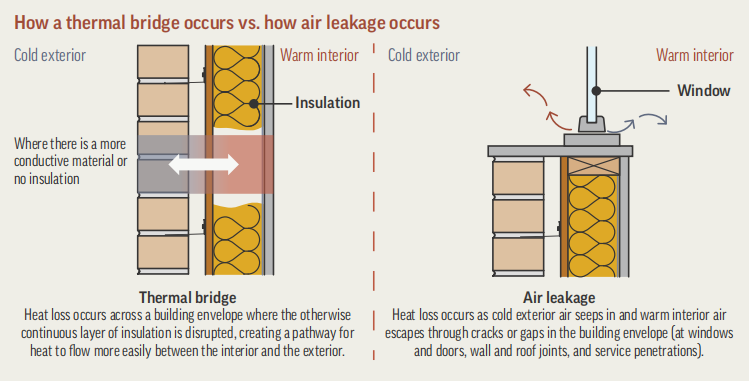
It must be designed carefully to avoid creating thermal bridges, or places in the envelope where materials that conduct heat cause unwanted heat loss in cold weather and unwanted heat gain in hot weather.
围护结构必须精心设计,以避免产生热桥。热桥是指围护结构中导热材料形成的部位,会在寒冷天气造成不必要的热量流失,在炎热天气造成不必要的热量进入。
Green Building Strategies
Green buildings have optimized building envelopes with high-performance windows, doors, roofs, and walls.
绿色建筑采用优化的围护结构,包括高性能窗户、门、屋顶和墙体。
Key features of a green building's walls include:
绿色建筑墙体的关键特点包括:
A thermal barrier (e.g., insulation and high-performance windows) to limit heat transfer between the inside and outside of the building to maintain a consistent indoor temperature and improve energy efficiency.
隔热层(如保温材料和高性能窗户),限制建筑内外的热量传递,保持室内温度稳定,提升能效。
A material's ability to resist heat flow is measured in terms of R-value: the materials' resistance to conductive heat flow. A higher R-value means greater insulating effectiveness.
材料抵抗热流的能力用 R 值(热阻值)衡量:R 值越高,保温隔热效果越好。
An air barrier (e.g., spray foam, caulk, or sealant) to limit uncontrolled air leakage and reduce energy loss and drafts.
空气屏障(如喷涂泡沫、密封胶),限制无控制的空气渗漏,减少能量损失与冷风渗透。
A water barrier (e.g., waterproofing materials) to prevent rain or melting snow from entering the building.
防水层(如防水材料),防止雨水或融雪进入建筑内部。
A vapor barrier (e.g., vapor-retarding membrane or materials) to manage the movement of water vapor and prevent condensation within walls.
隔汽层(如隔汽膜),控制水蒸气迁移,防止墙体内部结露。
Trapped moisture can lead to mold growth, which can harm people's health and prematurely degrade the building materials.
滞留的湿气会导致霉菌滋生,危害人体健康,并使建筑材料过早老化损坏。


 京公网安备 11010602007285号