Outdoor Water Use
室外用水
Landscape irrigation is a significant component of many projects’ ongoing outdoor water use.
景观灌溉是多数项目日常室外用水的主要组成部分。
The site design, including the amount, types, and placement of plants, can significantly influence the amount of water required for irrigation.
场地设计,包括植物的数量、种类与布置方式,会显著影响灌溉用水量。
Green Building Strategies
绿色建筑策略
Green building strategies aim to reduce outdoor water use by:
绿色建筑通过以下策略减少室外用水:
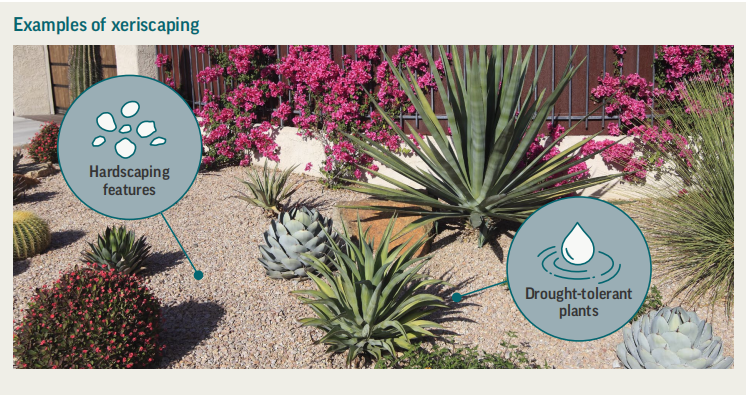
Selecting native and adapted species, since these typically do not need routine irrigation except during a brief period after planting. Xeriscaping is a specific version of this strategy that uses drought?tolerant native or adapted plants along with rocks, bark mulch, and other landscape elements.
- 选用原生及适生植物,这类植物除种植后短期养护外,通常无需常规灌溉。旱生景观(节水型景观)是该策略的典型形式,采用耐旱原生 / 适生植物,搭配岩石、树皮覆盖物等景观元素。
Selecting high?performance irrigation systems for any remaining irrigation needs. Drip and bubbler distribution systems, for example, channel water directly to root systems because they reduce the amount of water lost to evaporation.
- 对剩余灌溉需求选用高效灌溉系统,例如滴灌、涌泉灌溉系统,可将水直接输送至植物根系,减少蒸发损耗。
Installing weather?based irrigation controllers (also known as smart irrigation controllers), which respond to weather conditions.
- 安装基于气象的灌溉控制器(智能灌溉控制器),可根据天气状况自动调节。
Investigating the feasibility of using alternative non?potable sources of water (e.g., rainwater or graywater) for outdoor applications.
- 研究室外用水采用非饮用水替代水源的可行性,例如雨水、灰水。
Ecological conservation and restoration: The use of native and adapted plant species also helps provide habitats for local wildlife and supports ecosystems.
生态保护与修复:选用原生及适生植物,还有助于为本土野生动植物提供栖息地,维护生态系统稳定。


 京公网安备 11010602007285号