Energy and Atmosphere
能源与大气
Buildings rely on energy for many functions, including electricity and heating, cooling, and ventilation (HVAC) systems.
建筑运行依赖能源,包括电力以及采暖、制冷、通风(暖通空调 HVAC)系统。
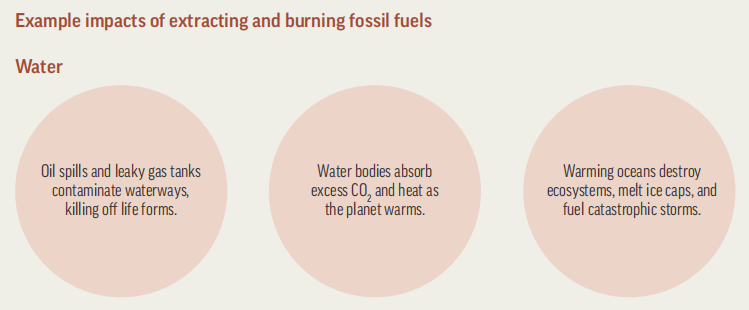
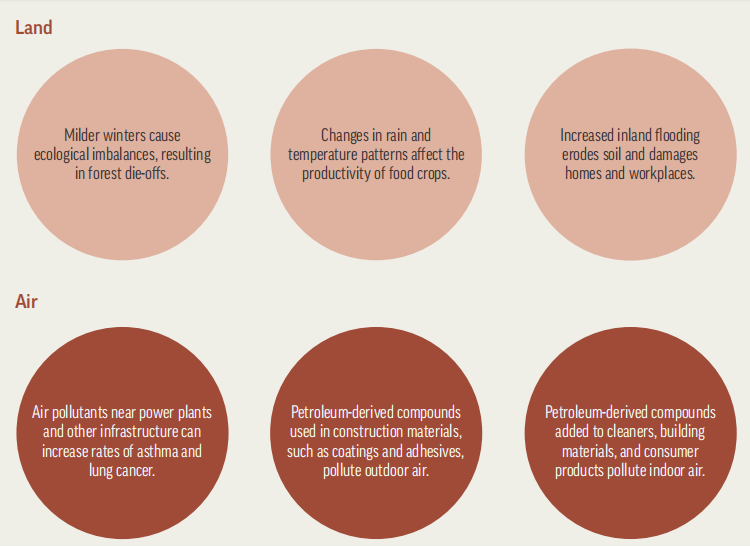
When buildings use gas, oil, and other fossil fuels for energy, there are steep economic, social, and environmental costs.
当建筑使用燃气、石油等化石燃料供能时,会带来高昂的经济、社会与环境成本。
Why it matters:
重要意义:
Worldwide, buildings account for 30% of total energy consumption.
Burning fossil fuels to produce energy also generates emissions that contribute to climate change.
How Energy and Atmosphere strategies can help:
能源与大气策略的作用:
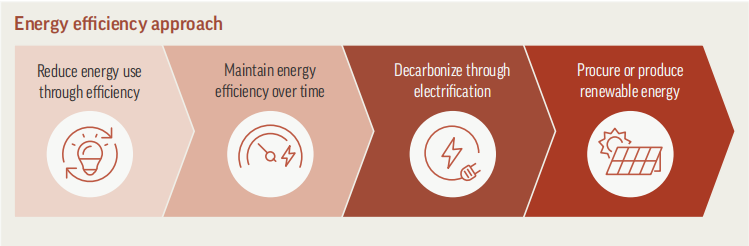
Green buildings start by reducing energy use through better design or energy retrofits. Focusing on efficiency first allows projects to maximize their impact.
- 绿色建筑首先通过优化设计或节能改造降低能耗;坚持能效优先原则,实现效益最大化。
Green buildings maintain low energy use over time by tracking energy use and verifying that all building systems are installed and maintained as intended.
- 绿色建筑通过能耗监测,核验所有系统按设计安装与运维,长期维持低能耗水平。
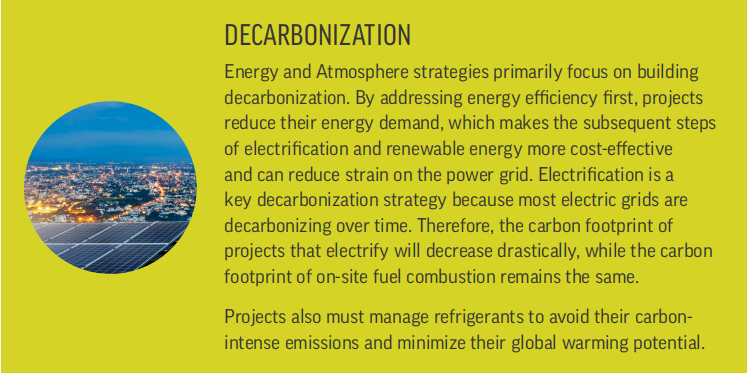
Further progress toward decarbonization is made by electrifying building systems and optimizing how projects interact with the power grid.
- 通过建筑系统电气化、优化项目与电网的联动,进一步推进脱碳目标。
Green buildings produce and/or procure clean, renewable energy.
ENERGY AND ATMOSPHERE TERMS
能源与大气术语(LEED v5 中英对照)
ENERGY EFFICIENCY 能源效率
Energy-efficient building: A building that uses less energy than other buildings to perform the same tasks or produce the same results because its systems perform well.
高能效建筑:因系统性能优异,完成同等功能、实现同等效果时,能耗低于同类建筑。
THE BUILDING ENVELOPE 建筑围护结构
Building envelope: The components, such as roofs, walls, windows and foundation, that separate a building’s interior from the exterior. The building envelope provides thermal control, structural integrity, and protection from weather.
建筑围护结构:分隔建筑室内外的构件,包括屋顶、墙体、门窗、基础;起到热工调控、结构稳固、抵御外界气候的作用。
R-value: The measure of a building envelope material’s resistance to conductive heat flow. A higher R?value means greater insulating effectiveness.
R 值:衡量围护结构材料阻止热传导的能力;R 值越高,保温隔热效果越好。
Thermal bridges: Places in the building envelope where materials that conduct heat cause unwanted heat loss in cold weather and unwanted heat gain in hot weather.
热桥:围护结构中导热性强的部位,冬季造成不必要的热量流失,夏季造成不必要的热量进入。
HVAC SYSTEMS 暖通空调系统
Energy-recovery ventilation: A ventilation system that uses the outgoing air to help condition the incoming air.
能量回收通风系统:利用排出的室内空气,预处理进入室内的新风。
Ventilation: The exchange of air between the indoors and outdoors. In some buildings, ventilation can be achieved passively with architectural features like breezeways and operable windows. This is known as passive ventilation. However, most buildings require mechanical systems for ventilation, known as mechanical ventilation.
通风:室内外空气交换。部分建筑可通过通风廊道、可开启窗等建筑构造实现自然通风(被动通风);多数建筑依靠设备实现机械通风。
LIGHTING 照明
Connected lighting power (also known as lighting power density): A measure of how much power per square foot or square meter would be used if all the lights in a building were on.
连接照明功率(又称照明功率密度 LPD):建筑所有灯具同时开启时,单位面积的用电功率。
PLUG AND PROCESS LOADS 插座负荷与工艺负荷
Occupant engagement programs: Programs that involve communicating with, enabling, and empowering project occupants to help meet sustainability goals.
使用者参与计划:通过沟通引导、赋能使用者,助力项目达成可持续目标的管理措施。
Parasitic loads: The power draw of plug loads when devices are turned off.
寄生负荷:设备关机状态下仍产生的插座待机功耗。
Plug load: The electrical current drawn by all equipment that is connected through a wall outlet. Examples include office equipment, small appliances, and personal devices.
插座负荷:通过墙面插座供电的所有设备用电,如办公设备、小型家电、个人电子设备。
Process energy: Heat or electricity consumed in support of a manufacturing, industrial, or commercial process other than conditioning spaces or maintaining comfort and amenities for the people in a building.
工艺能源:用于生产、工业、商业流程的热能或电能,不含室内环境调控、人员舒适保障能耗。
Process load: The total energy demand that results from the consumption or release of process energy. Examples include the energy used for commercial cooking, operating an escalator, and supermarket freezers.
工艺负荷:工艺能源消耗或释放产生的总用能需求,如商用烹饪、自动扶梯、超市冰柜能耗。
ENERGY DEMAND AND PEAK LOADS 能源需求与峰值负荷
Energy demand: The amount of energy that needs to be available to operate the project. Energy demand is also known as load.
能源需求:项目运行所需的可用能源总量,也称为负荷。
Peak demand: The maximum amount of thermal energy or electrical power that must be available at a specific point in time.
峰值需求(尖峰负荷):特定时刻所需的最大热能或电功率。
ENERGY METERING 能源计量
Building automation system (BAS): Technology used to control HVAC, lighting, and more in a building.
楼宇自动化系统(BAS):用于管控建筑暖通空调、照明等系统的技术。
Energy meters: Measuring devices and reporting systems that track energy use over time.
能源计量表:长期监测、记录能耗的测量设备与数据上报系统。
COMMISSIONING 调试
Building enclosure commissioning (BECx): A type of commissioning that helps ensure that components of the building envelope are installed and functioning properly.
建筑围护结构调试(BECx):用于确保围护结构构件安装到位、功能正常的专项调试。
Commissioning (Cx): The process of verifying and documenting that a project and all its systems and assemblies are planned, designed, installed, tested, operated, and maintained according to project requirements.
调试(Cx):验证并记录项目及所有系统、组件,按项目要求完成规划、设计、安装、测试、运行与维护的全过程。
Owner’s project requirements (OPR): A written document that details the ideas, concepts, and criteria the owner has prioritized.
业主项目要求(OPR):详细说明业主优先考量的理念、目标与标准的书面文件。
MONITORING-BASED COMMISSIONING AND RETRO?COMMISSIONING
基于监测的调试与既有建筑再调试
Monitoring?based commissioning: A type of commissioning that maintains and continuously improves project performance over time by gathering information about energy performance and using this information in a cycle of analysis, problem?solving, staff training and implementation, and further monitoring.
基于监测的调试:通过采集能耗数据,经分析、问题解决、人员培训、落地实施、持续监测的循环,长期维持并提升项目性能的调试方式。
Retro-commissioning: A type of commissioning that is provided by a third party for an existing project that includes assessment and testing of building systems and documentation of any measures that are needed to improve performance.
既有建筑再调试:由第三方对既有建筑开展的调试,包括系统评估、测试,并记录性能提升所需措施。
CARBON EMISSIONS 碳排放
Decarbonization: The process of reducing or eliminating greenhouse gas emissions.
脱碳:减少或消除温室气体排放的过程。
REFRIGERANTS 制冷剂
Global warming potential (GWP): A measure of how much energy one ton of a gas will absorb over a given period of time relative to CO?. The larger the GWP, the more a given gas warms the Earth compared to CO?.
全球变暖潜能值(GWP):衡量 1 吨气体在特定时间段内吸收的热量,以二氧化碳为基准;GWP 越高,该气体温室效应越强。
Refrigerants: Fluids that change from liquid to gas and back again as they move heat from one place to another.
制冷剂:通过气液两相形态转换,实现热量转移的流体。
BUILDING ELECTRIFICATION 建筑电气化
Electrical grids: The networks of wires and cables that transport electricity from power plants to end users.
电网:将电力从发电厂输送至终端用户的线缆网络。
Electrification: The process of replacing non?electric energy sources with electricity.
电气化:用电力替代非电力能源的过程。
Heat pump: A type of HVAC system that draws thermal energy out of water, air, or the ground into a refrigerant and then transfers that heat to another place.
热泵:一种暖通空调系统,从水、空气或土壤中提取热能至制冷剂,再将热量转移至其他区域。
GRID INTERACTIVITY 电网交互性
Demand response: A change in a project’s normal electricity?use patterns that is triggered by a signal from a grid operator — typically either an increase in the price of electricity or an alert that system reliability has been jeopardized.
需求响应:受电网调度信号触发,项目改变常规用电模式;通常由电价上涨或电网可靠性预警引发。
Energy storage: The ability to store electrical or thermal energy on the project site and then either consume the stored energy or return it to the grid if grid power is in short supply.
储能:在项目场地储存电能或热能,电网供电不足时自用或回输电网。
Grid interactivity: Systems that allow buildings to manage the level and timing of their electrical demand on the grid.
电网交互系统:使建筑可调控用电负荷大小与用电时段,优化对电网的用电需求。
RENEWABLE ENERGY 可再生能源
Non-renewable energy: Energy sources that exist in finite quantities and cannot be naturally replenished or regenerated within a human timescale, such as fossil fuels (e.g., oil, coal, and gas) and nuclear energy.
不可再生能源:储量有限、在人类时间尺度内无法自然再生的能源,如化石燃料(石油、煤炭、天然气)、核能。
Off-site renewable energy: Renewable energy that is generated at a location separate from where it is consumed.
场外可再生能源:在项目场地以外生产、供项目使用的可再生能源。
On-site renewable energy: Renewable energy that is consumed at the same location where it is produced.
场内可再生能源:生产与使用在同一场地的可再生能源。
Renewable energy: Energy that is derived from sources that are replenished at a faster rate than they are consumed, such as sunlight, wind, rain, tides, waves, and geothermal heat.
可再生能源:再生速度快于消耗速度的能源,如太阳能、风能、雨水、潮汐能、波浪能、地热能。
Renewable energy certificates (RECs): Purchased certificates that fund the production of off?site renewable energy to offset a project’s energy use. RECs are also known as energy attribute certificates (EACs).
可再生能源证书(RECs):通过购买证书,资助场外可再生能源发电,抵消项目能耗;也称为能源属性证书(EACs)。
EMERGENCY CONTINGENCIES 应急保障
Islanding: Separating one part of an electric grid (e.g., a project’s energy?generating system) from the main power network, making the project’s system its own disconnected grid.
孤岛运行:将电网局部(如项目发电系统)与主电网断开,形成独立的微电网。
LEED Impact Areas: Energy and Atmosphere
The Energy and Atmosphere strategies in LEED address all three of LEED’s impact areas:


 京公网安备 11010602007285号