Indoor Water Use
室内用水
Indoor water use encompasses water used for urinals, toilets, showers, kitchen and bathroom sinks, and various appliances.
室内用水包括小便池、马桶、淋浴、厨卫洗手池及各类用水设备的耗水。
Indoor water use is a significant component of many projects’ ongoing water use.
室内用水是多数项目日常用水量的重要组成部分。
A project’s indoor water use is impacted by the amount of water used by fixtures (such as toilets and sinks) installed on site.
项目室内用水量受现场安装的用水器具(如马桶、洗手池)耗水量影响。
This water use is measured in flush and flow rates, which are published values on the amount of water each fixture uses, provided by the fixture manufacturer.
用水量以冲水流量、出水流量计量,该数值由器具厂商标注发布。
For toilets and urinals, the flush rate indicates the liters or gallons of water used per flush.
马桶、小便池的冲水流量,指每次冲水消耗的升数或加仑数。
For faucets and showers, the flow rate indicates liters or gallons used per minute at full flow.
水龙头、淋浴的出水流量,指满流状态下每分钟的出水量。
Green Building Strategies
绿色建筑策略
Green building strategies aim to reduce indoor water use by:
绿色建筑通过以下策略降低室内用水量:
? Retrofitting older fixtures with aerators, which are devices that inject air into the water in order to reduce water use, and other devices for reducing flush and flow rates.
- 为老旧器具加装起泡器(向水流中注入空气以减少用水量)及其他可降低冲水、出水流量的装置。
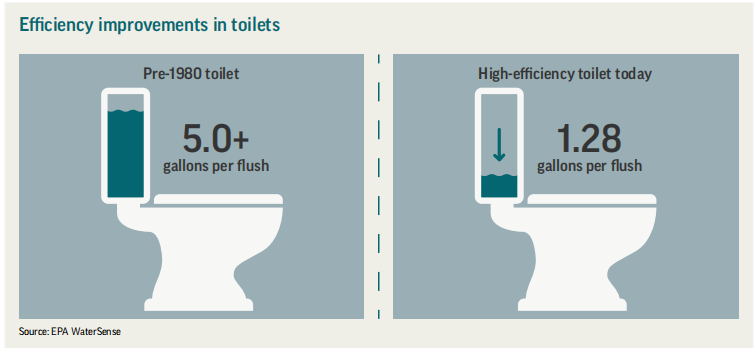
? Installing high?efficiency fixtures. This refers to plumbing fixtures that either conserve water (e.g., low?flow lavatories and dual?flush toilets) or eliminate water demand entirely (e.g., waterless urinals and composting toilets).
- 安装高效节水器具:包括可节水的器具(如低流量面盆、双冲式马桶)或完全无需用水的器具(如无水小便池、堆肥马桶)。
? Investigating the feasibility of using alternative non?potable sources of water (e.g., rainwater or graywater) to flush toilets and urinals.
- 研究使用雨水、灰水等非饮用水替代水源,用于马桶、小便池冲水的可行性。


 京公网安备 11010602007285号