Thermal Comfort 热舒适
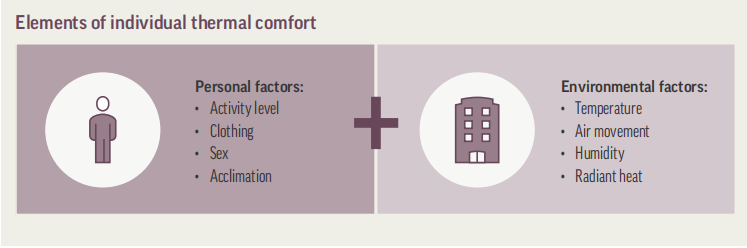
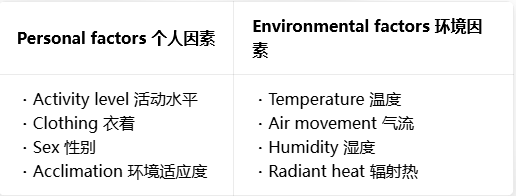
Thermal comfort refers to a person's subjective sense of satisfaction with their thermal conditions. Environmental factors, such as air temperature and air movement, along with personal factors, such as activity level and clothing, can affect thermal comfort. Humidity and radiant heat are also important.
热舒适是指人体对所处热环境的主观满意程度。环境因素(如空气温度、气流)与个人因素(如活动水平、衣着)都会影响热舒适,湿度与辐射热同样是重要影响因素。
Thermal comfort plays an important role in the indoor environmental quality of a building since people are more satisfied in a space that they find to be comfortable.
热舒适是建筑室内环境质量的重要组成部分,人们在舒适的环境中满意度会更高。
Elements of individual thermal comfort 影响个人热舒适的因素
Green Building Strategies 绿色建筑策略
Green buildings provide comfortable thermal environments for their occupants. Strategies include both:
- Following thermal comfort standards that attempt to define the combinations of factors that will make most people satisfied with the conditions in a space
- Giving people options and some control over their thermal environment whenever possible, since no single set of conditions can please everyone all the time
绿色建筑致力于为使用者提供舒适的热环境,相关策略包括:
- 遵循热舒适标准,这些标准定义了让大多数人对空间环境感到满意的因素组合
- 尽可能为使用者提供对热环境的自主调节选项,因为单一的环境条件无法始终满足所有人的需求


 京公网安备 11010602007285号