Embodied Carbon of Building Materials 建筑材料的隐含碳
Embodied carbon is one of the key metrics that an LCA quantifies, since every step in a product’s or building’s life cycle generates carbon emissions. For example, a wood board’s embodied emissions might include emissions from a diesel engine used in the logging equipment, the vehicles that transported the raw materials, the equipment in the factory that made the product, and the vehicles that transported the final product to the project site.
隐含碳是生命周期评估(LCA)量化的关键指标之一,因为产品或建筑生命周期的每个阶段都会产生碳排放。例如,一块木板的隐含碳排放可能包括:伐木设备柴油机的排放、原材料运输车辆的排放、产品生产工厂设备的排放,以及成品运输至项目现场的车辆排放。
Historically, concrete has had high levels of embodied carbon because of the emissions associated with making portland cement, a key component of concrete. Companies are now working on ways to reduce the embodied carbon of concrete – either by using less cement when making concrete or by reducing the embodied carbon of cement.
历史上,混凝土的隐含碳排放量一直很高,这源于其关键成分 —— 硅酸盐水泥生产过程中的碳排放。目前,行业正致力于降低混凝土的隐含碳,方式包括减少水泥用量,或降低水泥本身的隐含碳排放。
Green Building Strategies 绿色建筑策略
Green building strategies prioritize reducing embodied carbon in building materials. Strategies include:
- Reducing the total amount of materials used through sufficiency, circularity, and material-use optimization
- Purchasing materials locally, which reduces the impact of transporting the products long distances
- Selecting materials with lower embodied carbon
绿色建筑策略优先降低建筑材料的隐含碳,具体方式包括:
- 通过充足性、循环性与材料利用优化,减少材料总用量
- 就近采购材料,减少产品长距离运输带来的环境影响
- 选用隐含碳更低的材料
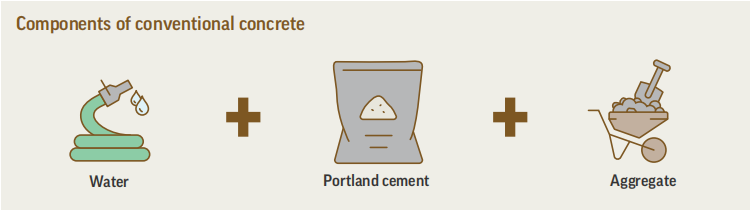
Components of conventional concrete 传统混凝土的组成
- Water 水
- Portland cement 硅酸盐水泥
- Aggregate 骨料
Ecological conservation and restoration 生态保护与修复
Wood and other plant-based materials tend to be less energy-intensive to make than cement is and can therefore be lower in embodied carbon. However, many conventional forestry and agricultural practices have high carbon emissions and can also degrade air and water in other ways. Sustainable or regenerative forestry and farming practices can help ensure the lowest possible embodied carbon for plant-based materials while balancing the needs of local ecosystems.
木材及其他植物基材料的生产能耗通常低于水泥,因此隐含碳更低。但许多传统林业和农业模式的碳排放量较高,还可能通过其他方式污染空气与水体。可持续或再生型林业与农业实践,可在平衡当地生态系统需求的同时,将植物基材料的隐含碳降至最低。


 京公网安备 11010602007285号