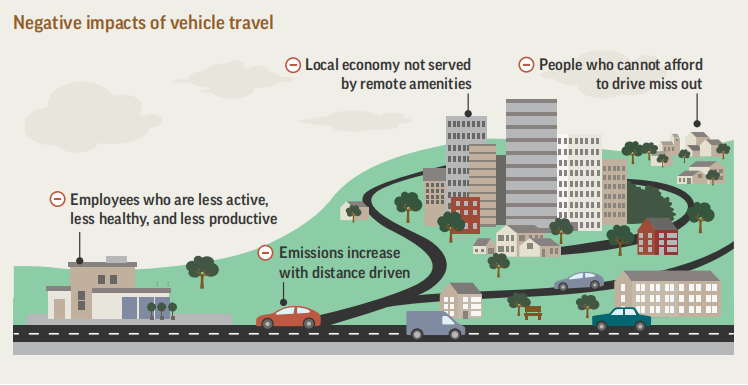
There are additional negative effects of having to drive a car to get to and from a project site that impact the community, including increased emissions, lack of contribution to the local economy, inequitable access to the building, and decreased employee health, productivity, and retention.
依赖驾车往返项目场地还会对社区产生其他负面影响,包括碳排放增加、对地方经济带动不足、建筑可达性不公平,以及员工健康水平、工作效率与留存率下降。
Green Building Strategies
绿色建筑策略
Green building strategies encourage alternative transportation, which is the use of modes of transportation other than a single?passenger motor vehicle. Some forms of alternative transportation include carpools, public transit, and bicycling.
绿色建筑策略鼓励采用
替代型交通方式,即单人机动车以外的出行方式,例如拼车、公共交通及骑行。
These strategies all aim to reduce commuting emissions, which are the carbon emissions associated with driving single?occupancy vehicles to and from a building.
以上策略旨在降低
通勤碳排放,即驾驶单人乘用车往返建筑产生的碳排放。
There are several strategies that enable people to get to and from a building without needing to drive, including:
可通过以下多种方式实现无驾车通勤:
? Ideally, selecting a location close to where people already live or near existing high?quality public transportation
- 优先选址于居民区周边或优质公共交通沿线
? If needed, sponsoring transportation between the project site and other locations
- 必要时提供项目场地与其他区域之间的通勤接驳服务
? Engaging with local governments and affected communities to optimize routes, schedules, and modes of transit
- 联合地方政府与相关社区,优化公共交通线路、运营班次及出行方式


 京公网安备 11010602007285号