Material Sufficiency 材料充足性
The materials used to construct a building and the products used within it all require resources to extract, manufacture, use, and dispose of. The amount and type of materials used on a project determine its environmental impact.
建筑施工及内部使用的材料与产品,在开采、生产、使用和处置阶段均需消耗资源。项目所用材料的数量与类型,直接决定其环境影响。
Green Building Strategies 绿色建筑策略
Green building strategies aim to reduce the environmental impacts of a project’s materials. Strategies include:
绿色建筑策略旨在降低项目材料的环境影响,主要包括:
-
Embracing the mindset of sufficiency, which refers to a set of measures and practices that avoid demand for energy, materials, land, and water while delivering human well-being within planetary boundaries. Planetary boundaries are a framework that sets limits on human activities on processes vital to Earth’s stability.
践行 “充足性” 理念,即在地球承载范围内保障人类福祉的同时,减少对能源、材料、土地和水资源需求的一系列措施与实践。“地球承载边界” 是一个框架,为影响地球稳定性的关键自然过程设定人类活动的安全限值。
-
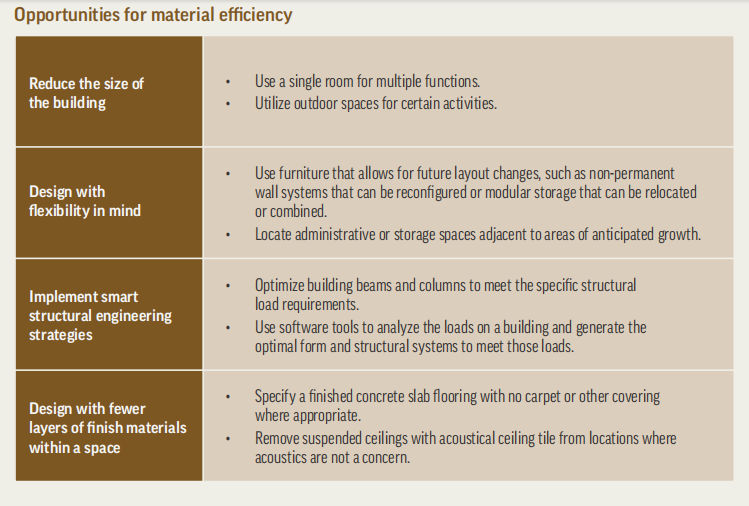
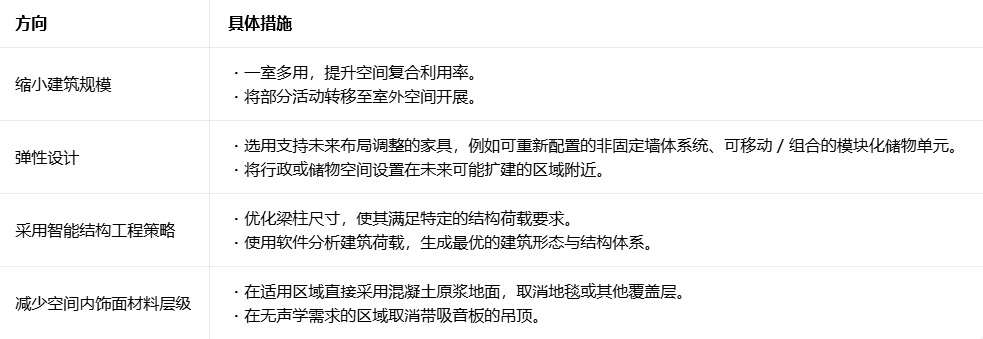
Designing the project efficiently to reduce the amount of material needed for a particular function. This can be done through material efficiency, which refers to using less material to perform the same function or produce the same results. This is also referred to as material-use optimization. There are opportunities for material efficiency throughout the design process.
高效设计项目,减少特定功能所需的材料用量。这可通过材料效率实现 —— 即以更少的材料完成同等功能或达成同等效果,也被称为材料利用优化。设计全流程均存在提升材料效率的机会。
-
Designing the project with flexibility in mind, which enables the project to meet future needs while minimizing additional material use.
采用弹性设计,使项目能够适应未来需求,同时减少额外材料的投入。
Opportunities for material efficiency 提升材料效率的途径


 京公网安备 11010602007285号