Indoor Air Quality 室内空气质量
While there are many aspects of a building's indoor environmental quality, providing safe air to breathe is an essential requirement. Indoor air quality (IAQ) refers to the air quality within and around buildings and structures, especially as it relates to the health and comfort of building occupants.
建筑室内环境质量包含多个方面,其中提供安全可呼吸的空气是核心要求。室内空气质量(IAQ)是指建筑及构筑物内部与周边的空气质量,尤其与建筑使用者的健康和舒适度相关。
A building's IAQ is impacted first by the sources of pollution in and around it, and then by how the building manages airflow. Outdoor air pollution impacts IAQ since harmful contaminants may make their way inside the building. The worse the outdoor air, the greater the risk of poor indoor air. There are also many potential sources of pollution inside buildings, from both materials and activities.
建筑的 IAQ 首先受周边及内部污染源影响,其次受建筑气流管理方式影响。室外空气污染会影响室内空气质量,因为有害污染物可能进入建筑;室外空气质量越差,室内空气质量恶化的风险越高。此外,建筑内部也存在大量潜在污染源,包括材料本身和室内活动产生的污染。
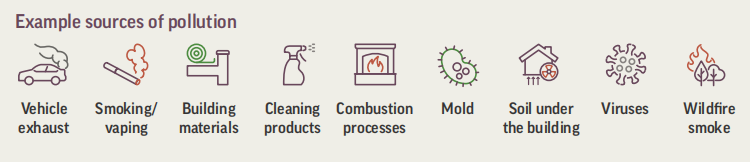
Example sources of pollution 污染源示例
- Vehicle exhaust 汽车尾气
- Smoking/vaping 吸烟 / 电子烟
- Building materials 建筑材料
- Cleaning products 清洁产品
- Combustion processes 燃烧过程
- Mold 霉菌
- Soil under the building 建筑下方土壤(含氡气等污染物)
- Viruses 病毒
- Wildfire smoke 野火烟雾
Green Building Strategies 绿色建筑策略
Green buildings implement strategies to provide healthy IAQ, including:
- Source control, which refers to eliminating sources of harm, such as contaminants that threaten indoor air quality. Source control is the most effective way to reduce indoor air pollutants. In other words, the best way to remove pollutants from a space is not to bring them inside to begin with.
- Ventilation, which refers to the exchange of air between the indoors and outdoors. As discussed in Chapter 8: Energy and Atmosphere, some buildings use passive architectural features for natural ventilation. However, most buildings require mechanical ventilation, which uses electrical equipment, such as ducts, fans, and vents, to manage airflow.
- Filtration, which refers to removing pollutants from the air. Every mechanical ventilation system includes air filters, which physically remove pollutants as air flows through them. HVAC systems filter outdoor air as well as recirculated indoor air. Standalone portable air cleaners can also be used to filter the air in specific indoor spaces.
- Moisture control within building systems (e.g., mechanical systems, plumbing systems, the building envelope) and interior finishes to prevent mold growth.
- Routine cleaning and pest management that avoids introducing additional hazards.
- Ongoing monitoring of air quality to ensure that good IAQ is maintained over time.
绿色建筑通过以下策略保障健康的室内空气质量:
- 源头控制:消除威胁室内空气质量的有害来源,这是减少室内空气污染物最有效的方式 —— 即从一开始就避免将污染物带入室内。
- 通风:室内外空气交换。如第 8 章《能源与大气》所述,部分建筑采用被动式设计实现自然通风,但大多数建筑需依赖机械通风,通过风管、风机、风口等设备管理气流。
- 过滤:去除空气中的污染物。所有机械通风系统均配备空气过滤器,通过物理方式过滤流经的污染物;暖通空调系统会同时过滤室外新风与室内循环空气,也可使用便携式空气净化器处理特定空间的空气。
- 控制建筑系统(如机电、给排水、围护结构)及内饰材料的湿度,防止霉菌滋生。
- 定期清洁与虫害管理,避免引入额外危害。
- 持续监测空气质量,确保室内空气质量长期维持在良好水平。


 京公网安备 11010602007285号