Accessibility and Inclusive Design 可达性与包容性设计
The first essential element of indoor environmental quality is the ability of a space to serve people of all sizes, shapes, and ages. Certain laws and building codes may incorporate aspects of accessibility, although this is not universally true. Even in locations with accessibility requirements, regulations may fall short of making spaces work for everyone.
室内环境质量的首要核心要素,是空间服务不同体型、年龄人群的能力。部分法律法规与建筑规范可能包含可达性相关要求,但并非普遍适用;即便在有相关规定的地区,也可能无法真正实现 “人人可用” 的目标。
Green Building Strategies 绿色建筑策略
Green buildings embrace inclusive (or universal) design, which is a creative approach focused on making the built environment accessible to people of all ages, abilities, and demographics.
绿色建筑采用包容性(通用)设计,这是一种以 “让所有年龄、能力与背景的人群都能使用建成环境” 为目标的创新设计方法。
Universal design addresses many aspects of accessibility, including:
- Physical diversity
- Safety and aging
- Social health
- Navigation
通用设计覆盖可达性的多个维度,包括:
- 身体多样性适配
- 安全与适老化设计
- 社会健康支持
- 空间导视与导航
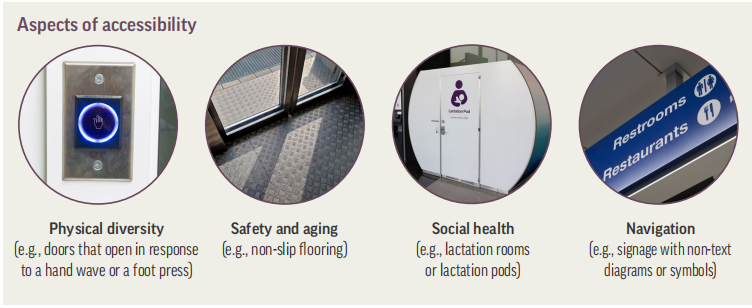
Aspects of accessibility 可达性示例
- Physical diversity (身体多样性适配):如挥手 / 脚控感应开门
- Safety and aging (安全与适老化):如防滑地面材料
- Social health (社会健康支持):如母婴室 / 哺乳室
- Navigation (空间导视):如图标化、非文字标识系统
Incorporating these aspects of accessibility allows spaces to be welcoming to all occupants. To best accomplish this, project teams must consider accessibility from the earliest stages of the project. This allows accessibility strategies to be integrated in a way that supports mobility, eases navigation, and improves the experience of the space for everyone.
融入这些可达性设计,能让空间对所有使用者都更友好。要实现这一点,项目团队必须在方案早期就纳入可达性考量,让相关策略能从根源上优化通行、导视体验,提升所有使用者的空间体验。


 京公网安备 11010602007285号