Development density:开发密度
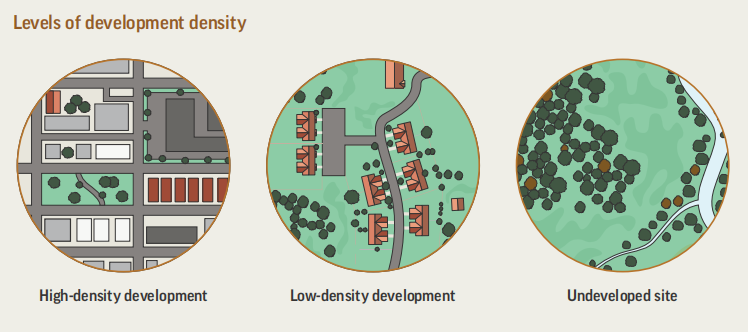
Development density is defined as the total building floor area or total number of dwelling units on a unit of land relative to the total buildable area on the same unit of land. In other words, development density is a measure of how many buildings or housing units are on a given amount of land.
开发密度定义为:单位土地上的总建筑面积或住宅单元数量,与该地块可建设总面积的比值。简单来说,开发密度用于衡量一定土地范围内建筑或住宅单元的密集程度。
When selecting a site, project teams must consider how the project will impact an area’s existing density. For example, will it turn undeveloped land into low?density development? Or will it fit into an area that already has high?density development and existing infrastructure?
在场地选址阶段,项目团队需考量项目对区域现有开发密度的影响。例如,项目是否会将未开发土地打造为低密度开发区域?或是融入已有高密度开发及成熟基础设施的片区?
Both developed and undeveloped land play essential roles in society, but there is limited land that is appropriate to develop.
已开发土地与未开发土地对社会均具备重要价值,但适宜开发的土地资源十分有限。
(LEED 专业表述)
Green Building Strategies
绿色建筑策略
Green building strategies seek out high?density locations. High?density development, sometimes called compact and connected development, is a more sustainable way to develop land because it:
绿色建筑策略优先选择
高密度区位。高密度开发,有时也称为
紧凑连通式开发,是更可持续的土地开发模式,原因如下:
? Leaves more space outside the built?up areas for nature and for agriculture
- 在建成区以外预留更多自然空间与农业用地
? Provides economic, environmental, and social benefits for all community members
- 为全体社区居民带来经济、环境与社会效益
Although not every project can or should be in a busy urban center, every project team can find ways to connect people with one another and with the services they need.
尽管并非所有项目都适合或必须选址于繁华市中心,但每个项目团队都可通过规划,实现人群之间、人群与配套服务的便捷联系。


 京公网安备 11010602007285号