Brownfields and Sensitive Receptors
棕地与敏感受纳体
There are many locations that have been impacted by transportation?related pollution or industrial hazardous waste. Contaminated buildings or sites, such as former gas stations, dry cleaners, or factories, have contaminated building materials, soil, or groundwater due to past use of toxic chemicals. These buildings are considered brownfields, a type of property whose expansion, redevelopment or reuse may be complicated by hazardous substances, pollutants, or contaminants.
许多区域曾受到交通污染或工业危险废弃物影响。加油站、干洗店、工厂旧址等受污染建筑或场地,因历史上使用有毒化学品,造成建筑材料、土壤或地下水污染。这类用地被称为
棕地,即因存在危险物质、污染物或致污物,导致扩建、再开发或再利用受到制约的土地。
Green Building Strategies
绿色建筑策略
Green buildings can help address these issues by remediating a brownfield, which means removing dangerous or poisonous substances or limiting the effect that they have on people and the environment.
绿色建筑可通过
棕地修复解决此类问题,即清除危险、有毒物质,或控制其对人类与环境造成的影响。
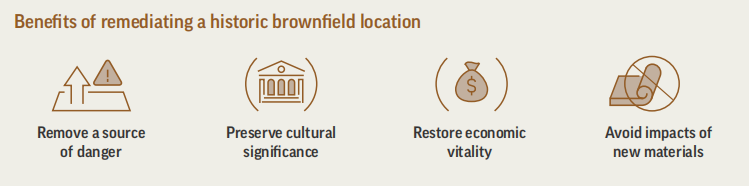
Brownfield remediation may be necessary in some historic locations because of their industrial pasts. Cleaning up and adapting a historic structure for reuse can:
部分历史地块因过往工业用途,需开展棕地修复。对历史建筑进行整治改造、再利用可实现:
? Remove a source of danger
- 消除安全隐患
? Preserve the building’s cultural significance
- 保留建筑的文化价值
? Restore economic vitality
- 恢复区域经济活力
? Avoid the environmental and social impacts associated with new building materials
- 规避新建建材带来的环境与社会影响
Green buildings also avoid creating new sources of pollution. Certain project types, like shipping centers or airports, are more likely to create hazardous pollution. These projects should be located far from sensitive receptors — areas where occupants are more susceptible to the adverse effects of exposure to toxic chemicals, pesticides, and other pollutants. Examples include hospitals, schools, and housing for older adults.
绿色建筑同时避免新增污染源。物流中心、机场等部分项目类型更容易产生有害污染,这类项目应远离
敏感受纳体。敏感受纳体指人群更易受有毒化学品、杀虫剂及其他污染物侵害的区域,例如医院、学校和老年住宅。
Quality of life: Exposure to transportation?related pollution and industrial hazardous waste is not equally shared. People who have the least economic and political power often end up living, working, or going to school near highly polluting power plants, factories, and highways. Rates of certain illnesses, including asthma, lead poisoning, and even cancer, may be higher in these communities.
生活质量:交通污染与工业危险废弃物带来的环境暴露并不公平。经济与社会话语权较弱的人群,往往居住、工作或就学于高污染发电厂、工厂及高速公路周边。这类社区人群的哮喘、铅中毒乃至癌症等疾病的发病率相对更高。


 京公网安备 11010602007285号